Showing posts with label Mystery. Show all posts

Saturday, August 19, 2023

Whispers From the Dead (1989)


By: Joan Lowery Nixon

Genre: Young Adult, Mystery, Suspense, Thriller

After a near-death experience due to an accident while out swimming with friends, Sarah Darnell has contracted a serious fear of the water and a connection to the spirit world. When her father gets a promotion, Sarah’s family is uprooted from their Missouri home and moved to a beautiful house in Houston, Texas. Almost immediately Sarah has a bad feeling about the home and soon enough she begins having visions and hearing cries of “¡Ayúdame!” late at night. It soon becomes clear that someone is reaching out to Sarah from the grave and she must help this spirit before she ends up meeting a similar fate.  

As someone who has read several of Ms. Nixon’s mysteries over the years, I was relatively disappointed in this one. The story itself was interesting – it’s a twist on the “we got a great deal on this murder house” trope, in that the family purchasing the house was unaware of the horrific events that occurred within the walls. Apparently the fact that a murder took place on the premises is not something a realtor is required to disclose – or at least it wasn’t in Texas in the 1980s. That’s always fun.

Sarah soon befriends her chubby, bubbly neighbor Dee Dee and becomes acquainted with Eric, a teenage boy that lives down the street. While Dee Dee is sweet and naïve, Eric is a douche right out the gate. He calls Dee Dee “Chubby” like it’s her name and criticizes Sarah for being too tall for him. He does, however, introduce her to the love interest of the story, Tony – a guy who is handsome and charming, but also has that bad boy edge. Sarah is immediately smitten and ignores any and all red flag behavior because “he’s so cute, though!”

Both Eric and Tony are friends of Adam Holt, the boy who used to live in Sarah’s house – a boy who is believed to have murdered a pizza delivery girl in the foyer of the home but released on a technicality. A boy who was also accused of sexually assaulting a classmate – but people don’t believe that happened because she “has a reputation.” (Yay, the nasty belief that someone who is sexually promiscuous cannot be sexually assaulted. 

Promiscuous people still pick and choose who they get involved with and still have the right to say no to anyone who they don’t want to be with. Also, if she’s owned up to her easy reputation, why would she lie about being with Adam?) Knowing that his friends stuck by him through the sexual assault accusations and murder charges is enough for me to say, “throw everyone in the damn trash,” but Sarah continues to hang out with Dee Dee and Tony.

From the details of her visions and evidence she finds within her home, Sarah realizes someone other than the pizza girl was likely murdered there and she is determined to solve the mystery so the young woman’s spirit can finally rest.

Sadly, Sarah is not the brightest when it comes to detective work and even more oblivious to potential dangers around her. She trusts people far too easily, even when it’s clear the spirit she’s communicating with is trying to warn her away from someone very specific. She gives away exactly how much she knows when fishing for information from people who very easily could be the murderer. She only tells one person where she hides the evidence of a second murder victim and then her house is broken into, the only thing stolen is said evidence. When she discusses the fact that a therapist told her the only way to stop the visions is to face her fears and get back in the water, a certain someone is very insistent on helping her get over her phobia, just the two of them alone at a very secluded pond. Absolutely no ill intentions there, nope.

Source

It’s pretty obvious who the killer is early on and the “twist” (or, rather, how Sarah figures out who it is) feels shoe-horned in within the second to last chapter. After this wakeup call she does get her wits about her and is able to come up with a strategy to bring the killer to justice. This includes outsmarting them in the final act.

The strongest element of the story was not the whodunit or the protagonist, but the spirit herself. The mystery around who she was and what really happened to her was the most intriguing. I also really liked the commentary on how the upper middleclass suburbanites viewed undocumented immigrants (cheap labor, easy to exploit, disposable). They too could live like the rich elite and have servants. These immigrants were also seen as easy victims – they can’t tell anyone if they’re being abused because they could risk deportation and many have no one that would miss them if they disappeared altogether. The excerpt at the beginning of the novel includes the spirit speaking Spanish so I was clued in pretty quickly that the victim was Hispanic and likely an undocumented immigrant once I noticed the trend of Latina maids in Sarah’s neighborhood. 

Oh my God! Exploitation of desperate poor people is so fetch! (Source)

This book is a product of its time, however, and does refer to these individuals as “illegal immigrants” or simply “illegals,” and while it’s not pleasant to read, it does help the reader see how this community views the folks they employ.

There are also some suspenseful sequences. I did worry for Sarah when she was alone in her house and realized there was an intruder, leading to her being trapped in a bathroom with them trying to break down the door. Also, despite seeing it coming, the pond sequence was also quite tense (because of course she went, the fool!). I felt her panic as she was pulled toward the water – and this was just from her water phobia, she had no idea her companion had nefarious plans for her.

I'm not a fan of Sarah’s mother. She’s tries to guilt Sarah into not having the visions because Sarah’s pain “hurts her mother and father.” Like Sarah wants to have this connection to the spirit world? Gee, Honey, have you tried NOT being psychic?

Sarah: 
Source

Her Mom: “Have you thought about how this affects ME?!”

Her Mom is also the one who encourages her to go to the pond with the aforementioned insistent individual. Maybe I was spoiled by having a mother who could easily read people but there is no way she would have let me go on such an excursion. Especially if I had a friend that worked as a life guard and access to the local pool like Sarah does.

I feel this is one of Ms. Nixon’s weaker works – the story is still interesting and I liked the social commentary, but normally the killer isn’t as easy to figure out and the protagonist is usually a lot smarter. It’s like she meets a boy she’s attracted to and her brain oozes out her damn ears. I did want to find out what happened to the spirit and I did care enough about Sarah to worry when she was in danger, but overall this was a slightly disappointing revisit to a favorite author from my childhood.

6/10

If you would like to see my thoughts while reading this book or want to keep up with my current reading adventures feel free to friend and/or follow me on Goodreads. 

** Credit to the Creators of all images and gifs used in this blog entry. I've sourced the ones I could but some have been sitting on my computer for a long time. If you see an image without a source and know/are the content creator, please comment below so I can credit accordingly. 

Sunday, April 2, 2023

Twisted Summer (1996)


By: Willo Davis Roberts

Genre: Mid-Grade / Young Adult, Mystery, Thriller

Every summer Cici’s extended family gathers at her grandparents’ “cottage” (more like mansion) at Crystal Lake for a few weeks of fun and relaxation. Her immediate family has only ever missed one summer at the lake, and as CiCi learns when she arrives for her current visit, she missed a lot more than some fun in the sun. The previous summer a girl was murdered and her crush's older brother was convicted of the crime. After speaking with her crush and his mother, Cici is convinced the real killer is still out there and decides to investigate the murder on her own. As the clues start to add up, Cici is shocked to find a member of her own family may be the true guilty party.

I was disappointed by this book. I’ve been on a big nostalgia reading kick these past few months, digging out books from authors I adored in childhood and my teen years. As a kid I devoured Willo Davis Roberts’s books, even checking Babysitting is a Dangerous Job and The Absolutely True Story … How I Visited Yellowstone Park with the Terrible Rupes out from my local library numerous times. (They were the only two books by this author my library had.) Now I’m afraid to revisit them as I may not like what I find upon a reread. Or, it could simply be that Roberts is better at writing stories that involve robbery and kidnapping than murder mysteries. I’ll save that determination for another day.

I did like the basic premise of the story – Cici has grown up with both the murdered girl and the boy wrongly convicted of the crime; it’s obvious that would catch her interest. The reason why she chooses to investigate the murder, however, is not because she was close to the victim or the alleged killer, or even that she likes to solve mysteries and is intrigued by this case – it’s because she wants to prove “she’s a big kid now” to her crush and win his romantic affections.

Jack-y, Wow! I'm a Big Kid Now!

Not to say she really does much in the way of investigating. She makes a list of suspects (that she foolishly leaves out for anyone to find), asks a few questions of the neighboring regular vacationers / locals, and draws a circle on a map to determine towns the victim may have visited in the days leading up to her demise. She doesn’t take the opportunity to look over the crime scene, try to retrace the victim’s steps the night of the murder, or even question anyone’s alibis. It’s just dumb luck when some incriminating evidence falls (literally) into her lap. She’s foolish and puts herself in unnecessary danger, while also not really having any idea what she’s doing at all.

Cici doesn’t really have much of a personality outside of being a naïve, whiney brat and obsessing over her crush, Jack. While on her current stay at the lake, her grandmother has a stroke and subsequently passes away after a few days. Cici acts like this is more of an inconvenience to her summer plans than being upset she lost her grandmother. She whines about going to the hospital to see her, then whines about the Viewing of the Body and even about attending the funeral. She claims it’s because she doesn’t want to remember her grandmother as the feeble woman in a hospital bed or as a corpse – I get that fear and I understand that people grieve in different ways. This could have been explored through a conversation with a parent, aunt, older cousin or friend, but it isn’t and she comes off as a selfish brat. Having lost a grandmother at around the same age as Cici, I would have given anything to see her one last time and wouldn’t have ever thought of skipping the funeral, so her behavior is baffling to me. I even understand the lack of closeness she feels with this particular grandmother, as she seems to be one of many grandchildren. Being a member of a very large family with many cousins, I get that it’s hard to get one-on-one time with your grandparents, but that doesn’t make it hurt any less when they pass on. Suck it up, kiddo.

Cici honestly doesn’t really seem to care about anyone but herself and Jack. Her feelings for him border on obsession. She’s fourteen (though she insists on calling it ‘almost fifteen’) and desperate for any bit of attention seventeen-year-old Jack might give her. While an age gap of two and a half to three years wouldn’t typically bug me, it does here due to the vast difference in maturity between the ages of fourteen and seventeen. He’s got his license and a part time job. He's also thinking about college. She’s barely hit puberty and hasn’t even started high school yet. She’s not ready for the things that he likely is when it comes to romantic relationships. Thankfully, despite her best efforts, their relationship remains mostly platonic, aside from his random comment that she’s “no longer flat chested,” when they’re reunited for the summer. 

Cici whines regularly that he still treats her like a little kid, and yeah, that’s because you’re still acting like one.

CiCi to Jack, Wondering Why He Doesn't See How Mature She Is.

Jack himself is an okay character, but him commenting on her chest almost immediately upon seeing her soured me to him very early on. He also talks negatively about Zoe, the murdered girl, stating, “There were a couple times before that I felt like smacking Zoe’s face – or her butt – but the way we were brought up, a guy doesn’t hit a girl, even if she deserves it.” (pg. 118) Um, maybe your Mama should have taught you that violence is rarely the answer? We don’t hit people simply because they are annoying, Jack! Also, spanking? As this is supposed to be a book for preteens, I’m assuming we’re not delving into the sexual connotations, so is Jack thinking himself Zoe’s disciplinarian? She’s your peer, bro, that’s not your job.

Aside from the aforementioned gross, misogynistic comments, Jack does prove himself a valuable ally to Cici. In fact, I doubt she would have figured anything out without him, really, since he’s the one that gathers the truly damning evidence. He’s also fiercely protective of her, which comes in handy when she does something stupid.

Zoe, poor Zoe, not only was she murdered but her name has been dragged through the mud ever since her death (and I’m assuming it was before as well). While it sounds like Zoe wasn’t the best person, she didn’t deserve what happened to her, nor the way everyone talked about her in the aftermath. Only one person mentioned her actual crimes of petty theft (stealing people’s money, rifling through purses, “borrowing” a neighbor’s vehicle), the rest focus on what a flirt she was. Numerous people refer to Zoe as “throwing herself at anything in pants” and a tease, believing she “got herself killed” by leading Brody (the alleged killer) on only to reject his sexual advances. Cici disagrees with that, not on the grounds of defending Zoe, but because “he wouldn’t have had to force her” or “she wouldn’t have said no.” So, either she was killed for being a tease or she wouldn’t have been killed for that reason because she’s actually a slut? Either way, this theory disparages Zoe long after her death. I thought we weren’t supposed to speak ill of the dead? 

We don’t slut shame or victim blame in this house. Also, “sluts” can and do have the ability and autonomy to say no. She could have hooked up with every guy at the lake that summer and still rejected her killer because it’s her body and her right to say who can and can’t touch her.

The adults thought her promiscuous, lacking proper discipline (it wasn’t just Jack that mentioned wanting to spank her), inappropriately dressed, and headed down a bad path. The kids and young adults thought she was nothing more than a pest. Only two middle aged women, Lina and Ellen, seem to have some empathy for Zoe – acknowledging she might be acting out for attention, especially from males, as her father is never around. So, Daddy Issues – got it. 

Maybe Zoe would have benefitted from this interaction.

They believed she would use her body and her looks to catch male interest but was too naïve regarding what would be expected of her once she got it. However, this just circles back to the theory she was killed for being a tease and that’s her fault because “men don’t handle rejection well.”

Cici is no less naïve in her dismissal of the “killed for being a tease” theory. Aside from assuming Zoe would let just anyone have their way with her; Cici also finds it unlikely a guy would kill a girl for rejecting him. 

Ah, the pre-Elliot Roger days, where this was likely still happening but we didn’t hear about it as much because the internet hadn’t really taken hold yet. It happens all the time, so much so that there’s a famous quote regarding this:

“Men are afraid women will laugh at them.
Women are afraid men will kill them.”
~ Margaret Atwood

Oh to be a fourteen-year-old in the early to mid - 1990s, so blissfully sheltered from the horrors of the world. Zoe very well could have been killed for this reason, but that’s due to the killer’s rage and sense of entitlement, not her telling him no.

Another theory was that Zoe flirted with the wrong guy and his significant other felt threatened enough to kill the competition. No mention of how wrong it would be for some of these guys (ex: the grown-ass men) to return her advances – straight to “that hussy’s trying to steal my man!” If a sixteen-year-old girl is that much of a threat to your relationship, just leave him honey. Either he’s tempted to cheat / already a cheater or you have some serious trust issues and neither makes for a healthy relationship. Also, if he’s a grown man encouraging her antics, he needs to be kept away from the underage girls.

The mystery itself is interesting – the more the characters dragged the victim, the more I wanted justice for her. As this is a book for tweens, the mystery isn’t very complex, which is fine. I did figure out the twist three chapters from the end, again no big deal in a book made for a young age group. However, the ending itself was fairly anticlimactic, leading to an underwhelming resolution.

The writing could have used more editing. There are a few points where Cici’s cousin Ginny is referred to as Ginger instead, but the text never clarifies if Ginny is a nickname for Ginger or if this was a mistake that slipped into publication.

The line “she threw herself at everything in pants” is repeatedly used and it becomes redundant very quickly. As the saying is only supposed to refer to males it seems outdated and nonsensical in an era where all sexes wear pants and Zoe was only targeting one.

The dialogue is often rambling – sometimes for the sake of exposition and sometimes just going off on something unrelated to the conversation that is never referenced again. Many of the characters barely exist in the story and most are indistinguishable from the others when they speak. No one is particularly well developed and there are times where it is obvious a decision was made in order to move the story along, even if it doesn’t make sense for the character. For instance, when Cici has a chance to climb out a window and escape the killer while they’re distracted, she chooses not to in order to stay and listen to them monologue so she can get all the details. 

What good is that going to do you if you’re dead? Is your ghost going to testify against them in court?

Lastly, a silly thing that I happened to notice and find amusing because I’m a horror movie nerd: Early on in the story Cici states, “There couldn’t have been a murder at Crystal Lake.” 

Jason Voorhees begs to differ ...
Side note: I know Crystal Lake, Michigan is a real place, but I couldn't let that slide without a Friday the 13th reference. 

I’ve dragged this book pretty hard, but it wasn’t terrible – I just didn’t really like it either. I don’t think I even would have liked it at the age it was aimed towards and it definitely hasn’t aged well enough for kids in that age bracket to embrace it today. It was an okay mystery and did hold my interest but the whiney heroine, her obsession with a questionable dude, the minimal investigation, the lackluster climax and the slut shaming / victim blaming of Zoe brought it down for me.

5/10

If you would like to see my progress notes for this book or keep up with my reading projects, feel free to friend or follow me on Goodreads. 

Sunday, February 16, 2020

The Marsh King’s Daughter (2017)


32889533

By: Karen Dionne


Genre: Fiction, Thriller, Suspense, Mystery

Content Warning: Animal Abuse / Death, Child Abuse, Domestic Violence and mentions of Sexual Assault / Rape.

Helena Pelletier finally has the normal life she’s always wanted – a loving husband, two healthy daughters, and her own successful business. However, what her family doesn’t know is that Helena harbors a secret about her past – a secret that she never believed would come to light and endanger her newfound peace. Helena thought she could keep her identity as the daughter of the convicted rapist and murderer, “The Marsh King,” from her family, but once her father escapes from prison, she knows she must track him down in order to protect herself and her loved ones.

I really wanted to like this book but I am very torn. I thought the premise of this novel was exciting. Helena’s character is a product of the abduction and rape of her mother – a case similar to that of Jaycee Dugard. Helena’s mother was abducted at age fourteen by a man of Native American heritage known to her only as Jacob. He held her captive for fourteen years, keeping her as a “wife” and forcing her to bare his child. I found this idea fascinating – a story told from the point of view of a child coming from such a situation.

The story itself was interesting. It alternates from present day Helena’s perspective to flashbacks of her life growing up in the cabin with her parents. It detailed her survivalist training and their “living off the land” lifestyle. Interwoven between these two time periods are excerpts from Hans Christian Andersen’s tale, “The Marsh King’s Daughter,” which provides a parallel to the story unfolding – especially between the daughter in the folk tale and Helena herself.

Ms. Dionne does know how to write a suspenseful thriller. The tale was a gripping read that slowly delved into darker depths the further we went into Helena’s back-story. This is a child who was raised in the wilderness and knew nothing of the outside world except for what she read in outdated National Geographic magazines. Helena was raised in an abusive home. She watched her father verbally abuse, beat and torture her mother while being taught to hate her mother as well. Helena adored her father, despite his sadistic cruelty to herself and her mother, and it wasn't until he took one “punishment” too far that she began to detach from him and eventually escaped with her mother.

The thing that really drags this book down for me is not the plot or the story itself – that was gripping and I couldn’t wait to find out what would happen during the final showdown between Helena and her father. What keeps me from giving this story a higher rating is the characters – most of the people in this book are scum.

Obviously Jacob is absolute garbage – there are no redeeming qualities for him. He gets off on killing animals and people alike, and wants to destroy Helena’s carefully crafted new life. However, Helena is an incredibly irritating protagonist and some of the things she says and does are so anger-inducing!

I really wanted to like Helena. As aforementioned, she had a unique, but horrific upbringing, and I was hoping she’d grown from that to be able to utilize her past skills to protect her family. While she does do the latter, she has hardly grown from the wild child who escaped the swamp. She was raised to hate her mother and she still does throughout the majority of the book, constantly taking jabs at the poor woman. Helena mentions that she never really bonded with her mother (though it appears her mother made several attempts to do so that Jacob thwarted). Helena criticizes nearly everything her mother ever did, to the point of being hypocritical – for example she drags her mother for never returning to school and improving her life after they escaped from Jacob, but Helena herself never finishes high school. Helena is a rape apologist making constant excuses for the horrible things her father did to her mother (including blaming his Native American heritage!) and stating her mother wouldn’t have been any better off if she hadn’t been abducted. Never mind the fact that her mother was in extensive therapy following her escape due to all the trauma she experienced. Helena states she had therapy too, and it taught her that her father was a narcissist who had slowly turned her against her mother, but she doesn’t manage to stop criticizing her mother until the last few pages of the novel when she seems to have a dramatic change of heart. Helena desperately needs to return to therapy – her healing is far from complete. She also needs to check the internalized misogyny that floods through her veins and makes her judge her daughters harshly (ex: criticizing her oldest for being “soft” and “afraid of bugs.”).

I do understand that Helena was limited from the start due to her first twelve years being shaped by an abusive, sadistic narcissist and not having any positive role models following her escape. With her mother too traumatized to assist in raising Helena, she really needed someone to step in and fill that void, but no one did. Helena and her mother moved in with her mother’s parents after their escape, only to be treated as cash cows rather than provided with love and assistance. Helena had little chance of developing normally, which is sad, but, unfortunately, I still have very little empathy for her character.

I also understand that the child in the fairy tale of the same name is there as a parallel to Helena. Helga, the girl in the tale, is beautiful yet evil by day and ugly yet good by night. I felt that we were supposed to wonder if Helena’s dark nature – her upbringing, her mixed emotions toward her father, and her anger towards her mother - would cause her to turn evil and side with him or if her less-often seen good side would prevail. The plot is fairly predictable in answering that question, but the resolution is satisfying all the same.

Overall, this was an interesting read. Although many have enjoyed this book immensely, I found the protagonist ruined it for me and the suspenseful plot was not enough to distract from her annoying narration. If you are not into internally misogynistic female protagonists, graphic depictions of child abuse, domestic violence and animal deaths, you should probably skip this one.

4.5/10

Sunday, March 29, 2015

Bag of Bones (1998)


by: Stephen King

Genre: Horror, Drama, Supernatural

Four years after the sudden death of his beloved wife, Jo, suspense novelist Michael Noonan returns to their summer home on Dark Score Lake. Upon arriving in the small Maine town, Mike finds he may not be alone in the lakeside retreat known as Sara Laughs. He hears phantom crying in the night, receives messages on his refrigerator, and has ghostly encounters in his dreams. After a chance encounter with young, twenty-one-year-old Mattie Devore and her three-year-old daughter, Kyra, Mike finds himself dragged into the middle of a custody battle, both by Mattie's ill-intentioned father-in-law and the spirits of Sara Laughs. What secrets does Dark Score Lake hold and why do the spirits want him to help Mattie?

I enjoyed this novel. While it has horror aspects in relation to the hauntings and the evil within some human beings, the story focuses more on the character development and relationships. For the first two thirds of the novel, the main focus is Mike's battle with writer's block, his grief over the loss of his wife, and the custody battle between Mattie and Max Devore. The more involved Mike becomes, the more he begins to fall for Mattie and seems to step easily into the father figure role when spending time with Kyra. The ghostly happenings serve as a connection between them, and it isn't until tragedy strikes that the horror really begins.

The characters are well-rounded and fleshed out, they have histories and unique characteristics. The good guys are relatable and likeable, while the villains are truly twisted and evil. Mike serves as a great narrator, he's relatable, intelligent and witty, with a softer side he's not afraid to show. He decides to help Mattie when the rest of the town has turned against her. He's so good with Kyra, and despite the age gap, the reader ends up wanting him and Mattie to end up together.  Mattie Devore seems like a fun and loving mother, who is doing everything she can to raise a toddler on her own. She doesn't trust easily and does not like to accept charity from anyone. She is clearly being persecuted by Max for no good reason and it's hard not to love her or her adorable daughter Kyra. These three are the center focus of the story, and while the rest of the characters were well-written, these three are the ones that stand out.

A key theme in this novel is the enduring bonds of love; bonds that last long after death. This theme keeps Jo alive, despite her death in chapter 1, and enables her to protect Mike as he comes closer to revealing the dark secrets of TR-90. However, hate and rage can also create bonds that endure through death and generations, and this powerfully negative energy is exactly what Jo is determined to protect Mike from.  

At first the only negative energy Mike has to deal with is in human form as Max Devore harasses and even assaults him when he gets in the way of Max getting custody of Kyra. The scene where Max and Rogette, two seemingly unlikely assailants have Mike trapped out in the lake, attempting to drown him, is one that had me clinging to my book, unable to put it down until I knew he was safe. This scene is the turning point for the novel, and the suspense continues until the final act. As the human behavior becomes more violent, the paranormal activity inside Sara Laughs intensifies, and as the novel reaches its climax, the reader follows  Mike as he puts together the connection between the haunting of Sara Laughs and the happenings in the lives of Mattie and Kyra Devore.

I really did enjoy this novel and loved the combination of ghost story and the fairly accurate portrayal of a custody battle. I felt for the characters and fell in love with them, especially Mattie, Mike, Jo and Kyra. However, it did lag a little in the middle of the novel before picking up speed again, so that may deter a few readers. Curious to see how it ended, however, I plugged through and ended up with a fairly satisfying ending. My only other complaint is that we don't find out what happened to Romeo Bissonette and George Kennedy after they both incur wounds in a shoot out. As their wounds didn't appear fatal, the reader can assume they made it out okay, but it still would be nice to know for sure.

Overall, despite a couple minor draw backs, this is a decent, entertaining read, delving more into human relationships than the horror aspects of the haunting of Sara Laughs. If you're looking for a lot of scares, this novel may not be for you. However, if you enjoy lots of suspense and character development, and don't mind that the ghostly activity takes a backseat to human interaction, you may enjoy this book as much as I did. This book is as much about the evil that lies in the hearts of humanity as it is about the dangers of the paranormal world.


6.5/10

Saturday, November 2, 2013

The Oak Knoll Mystery Series: Books 1 - 3


Deeper Than the Dead (2010)
Book #1

By: Tami Hoag

Genre: Fiction, Suspense, Thriller, Mystery

It is 1985. Behavior analysis and profiling are a fairly new addition to the FBI. Computers are still very expensive and not owned by many small town sheriff’s offices. DNA has barely been discovered and there is little technology to test it. Forensic technology is in the stone age, yet Oak Knoll has a serial killer on the prowl, and they must find out who it is the old fashioned way.

It’s a sunny afternoon when four fifth grade students running through the park woods stumble upon the body of a murder victim. She is the latest in a string of three bodies and a missing person. Detective Tony Mendez has a hunch that this is the work of a serial killer, and calls an old friend, Vince Leone, FBI profiler extraordinaire, to consult. It is as he fears, and he can only hope that he and Vince can find the killer before he or she strikes again.

I really liked the creepiness of the killer. I thought the signature of depriving the victims of sight, speech and hearing was original and scary. I really liked the way a child’s letter of hero worship about his father is interspersed with segments of the killer going through the routine with his latest victim. It is a great way to show that the killer could be anyone, even a devoted family man, and that’s always the scariest thing of all.

I love the character of Anne Navarre. She is fun, witty, and fiercely protective of her students. When she feels one of her students is being abused at home, she steps in. She is there for all of the students who found the body and refuses to allow anyone to push them around or scare them in any way. She’s not afraid to stand up to anyone, especially a misogynistic bully like Frank Farman, and I love that about her.  It is also what attracts Vince toward her. There is a bit of insta-love between the two, as well as a good fifteen to twenty year age difference, but they at least love each other for the right reasons. I read the third book before this one, so I knew where their romance would lead, and I enjoyed watching the slow beginnings.

I felt bad for the kids who found the body. Tommy Crane is a sweet, smart little boy who is often picked on and rarely stands up for himself. He and his friend Wendy were being tormented by Dennis Farman, the class bully, and his little sidekick, Cody. None of these kids have the happiest of home situations, especially Dennis and Tommy. I even felt bad for Dennis when his downward spiral commenced, due to everything he went through at home. Honestly, it was bound to happen, considering what that kid witnessed and dealt with on a daily basis.

I swear, there must be something in the water in Oak Knoll that produces awful parents. Other than Sara, Wendy’s mother, everyone has at least one crappy parental figure. Tommy’s mother is a raging, narcissistic control freak, who cares more that he missed his piano lesson than that he just stumbled upon a dead body in the park. She drugs him to make him sleep, screams at anyone who crosses her, and goes into spastic rages for little to no reason. Dennis’s father, Frank, is an abusive, misogynistic jerk who happens to work for the Sherriff’s department. He thinks all women are whores that are meant to serve men, and that’s exactly how he treats his wife. He beats her and berates her in front of Dennis, who, in turn, begins to believe that all women are stupid useless cows, only good for cooking food and having sex. Even Anne’s father is a complete prick, picking her apart constantly.

While I find the character of Franny amusing, I do feel he screams “GAY CLICHÉ!” He’s well-dressed, loves kids, is effeminate, loves fashion, etc. Every time I read a line of his dialogue, the cliché “gay lisp” would run through my head. I feel he’s a little too out there and obnoxiously flamboyant, hitting every gay cliché character trait out there. I think he would have been a better character if he was more subtle, not constantly reminding the reader that he is gay. We know, but there should be more to a character than clichés surrounding their sexuality.

I did like the overall story. I found the characters likable and the crime interesting. Hoag knows how to create suspense, ending each chapter just so, making me want to keep reading. If I hadn’t read Down the Darkest Road before this, I think I would have been fairly surprised when the killer’s identity was revealed. Hoag peppered in enough red herrings to make it harder to zero in on the actual villain.

Overall, it was a fun, suspenseful read. Aside from the cliché gay character and everyone’s parents being despicable, the mystery is solid and the villain is creepy.

7/10

Secrets to the Grave (2011)
Book #2

By: Tami Hoag

Genre: Fiction, Mystery, Thriller, Suspense

A year after the See No Evil murders, a young mother is found brutally murdered in her own home. The only witness to the crime is the victim’s small daughter, Haley – who also suffered injuries in the attack and remains traumatized. Enter Anne Leone (previously Anne Navarre) to help Haley through her trauma and identify the killer. Someone killed Marissa Fordham, but who and why? The investigation digs up many secrets along the way, secrets that give many motive for murder.

I found this mystery to be just as intriguing as the last one – maybe even more so because I didn’t know the identity of the killer before reading it. I really wanted to learn who killed Marissa, who seemed like such a great person – loving and friendly, a great mother. I also felt for Haley, the daughter left behind by the tragedy, and hoped that she would find happiness with a family that would love her.

I liked how Hoag, once again, led me down a road of twists and turns, introducing suspects here and there, making it hard to decide who the real villain was. Marissa’s best friend is also attacked – but is her attack related to Marissa’s death or based on something else altogether? There is also a subplot including Dennis Farman, his life in the psychiatric hospital and his visits with Anne.

The returning characters are as great as always. Anne Navarre married Vince Leone between Book #1 and this one, and she has left teaching to finish her schooling in psychology and work with children.  She is still as strong willed and feisty as ever, standing her ground to protect herself and any child in her care. Vince has fully retired as an FBI profiler, but still entertains speaking engagements and consults on murder cases. The two are ready to create a family together.

Tony begins to fall for Sara Morgan, Wendy’s mother, who is finally on the verge of divorcing her cheating husband. However, while I love Tony as a detective, he did annoy me a lot in his obsession with pinning the murder on Sara’s soon-to-be ex husband, Steve, and harassing the man. As much as the guy was a jerk and a bad husband, and as much as he deserved to be punched in the face, Tony went out of his way to make this guy’s life uncomfortable with no substantial evidence. That was not okay with me. Tony, you’re better than that!  

As for new characters, I found Gina to be annoying at first, but she proves her strength when she is abducted and left for dead. Haley is just adorable, and despite my knowing where she ends up due to reading Book #3 before hand, I was still incredibly anxious for her during custody meetings. I absolutely hated Milo Bordain, the older woman of wealth who claims to be Marissa’s benefactor and substitute mother-figure. Mrs. Bordain is self-righteous and self-centered, the entire world has to stop when she commands it. She always gets what she wants, and she wants Haley even though she doesn’t know the first thing about child development. She throws her weight around or temper tantrums when she cannot get her way. I wanted to jump in the book and throttle her!

The story was paced perfectly and, once again, Hoag demonstrates her talent for leaving a cliffhanger at the end of the chapter and forcing you to read on. The only thing that bothered me was the repeated detail of the bullet lodged in Vince’s brain. We know it’s there, it doesn’t need to be shoved down our throats. Otherwise, it is another fast-paced, interesting mystery story.

Overall, the story is gripping, fast-paced and keeps the reader hooked until the final pages. Other than a few minor annoyances, the book was well-written and enjoyable.

7/10


Down the Darkest Road (2011)
Book #3

By: Tami Hoag

Genre: Mystery, Suspense, Thriller

It has been four years since Leslie Lawton vanished on her way home from a softball game. Four years and not a trace of her has been found. Her mother, Lauren, while still not giving up hope that her daughter’s disappearance will one day be solved, has packed up younger daughter, Leah, and moved to Oak Knoll, California. Unfortunately, the man Lauren suspects abducted Leslie has also recently moved to town, and his sights might be set on Leah.

I really wanted to like Lauren but I just couldn’t bring myself to do so. I understand that she’s grieving both the loss of her eldest daughter and her husband, but she does have a young daughter to parent, and she’s not doing the greatest job. She doesn’t take care of herself, doesn’t eat, and drinks all the time. She’s paranoid and doesn’t let Leah go hardly anywhere – which is understandable, but hey, Leah is a teenager, let her have some time to be a kid. Also, the twist revelation about Lauren’s intentions in Oak Knoll really angered me, they could have left that part out and I would have been able to like her character a little.

I felt I could relate a bit to Leah, the youngest daughter. I know what it’s like growing up and being the good child, the one who follows all the rules and tries not to make waves; the one who tries not to burden other people with her problems because they’re suffering from the same things. I’ve been there, and it’s rough. It made me so angry that Lauren was so wrapped up in herself and her own pain that she didn’t even notice that her daughter was suffering too. Leah was living in the shadow of an older sibling who wasn’t even around anymore.

I did like the characters that are part of the ongoing series – Tony Mendez and Anne Leone. Both provided as much support and aid to Lauren as they could, especially when the creep who took Leslie begins harassing her at her home in Oak Knoll. With no proof that he was on her property, there’s nothing the police can do to help her, but Mendez looks into her case anyway, and winds up working with Detective Danni Tanner – my favorite female character out of the whole book. She’s confident, tough, quick with the wit, and has a healthy appetite. I enjoyed her immensely and hope to see her in future entries in the Oak Knoll series.

This novel does differ from Hoag’s usual style slightly because we know the identity of the killer/creep the entire time. Normally, Hoag will have the reader see a little bit of the story through the villain’s eyes, but we never know who that villain is until he or she reveals him/herself. Here, we know his identity, and we see the disgusting things he does and thinks about. He’s also incredibly frustrating because he knows that both Lauren and the police are onto him, and he plays cat-and-mouse games with them, hiding behind his rights when they try to retaliate. I wanted to reach into the book and kill him myself.

The twist toward the end caught me a little by surprise, but not entirely. The events of the climax are pretty action packed, and I’ve got to say, Hoag doesn’t let her heroines go down without a fight. These girls are fierce, even when backed into a corner, and there seems to be no way out, they still give it everything they’ve got.

Overall, this is a fun, simple read. If you don’t want the first two books in the Oak Knoll series ruined for you, I would read the series in order. This one gives away the endings to the prior two. While Lauren was a frustrating character, the rest of the colorful cast made up for it. Worth a look if you’re into mystery/thrillers with interesting plot lines and characters who won’t take things laying down.


6/10

Tuesday, August 13, 2013

The Diviners (2012)


Book #1 in “The Diviners Series”

By: Libba Bray

Genre: Young Adult, Historical Fiction, Horror, Mystery, Thriller, Suspense

Seventeen-year-old Evie O’Neill has been sent away to Manhattan to spend a few months with her uncle Will. Her parents consider this a punishment for her antics in town, but Evie couldn’t be more excited. She sees this as an opportunity to let loose and find herself, hoping she’ll find more people like her. She’s a free spirit, a flapper, and she has no intentions of being responsible. Yet, she soon discovers there is a killer on the loose in her city, one that has the police baffled. Aiding her uncle in his investigation of the paranormal symbols left behind by the killer, Evie realizes that she has the power to catch this villain through supernatural means – a power that could put her in more danger than the killer alone.

I really enjoyed this novel. I loved the setting – the 1920s is one of my favorite decades to read about, and Bray really brought it to life in this story. There are speakeasies, flappers and chorus girls. Prohibition is in full swing, racism is rampant, and homosexuals have to keep their sexuality a secret – only revealing themselves in underground clubs. She also gives us a glance at the butchery young, desperate women went through back then when they had abortions. (That is actually probably one of the scariest images in the novel.) She also discusses churches that supported the KKK and a movement to purify the genetics within the United States, both of which, scarily enough, actually existed.

I thought the characters were great as well. I did have a hard time dealing with Evie on occasion. Many of her decisions are selfish and can lead to trouble for others around her. (Ex: when Mabel gets arrested during a raid at a club, which could have been avoided if Evie had agreed to leave when Mabel wanted to.) As much as she claims to adore Mabel, she never really bothers to understand her, only try and change her to make her fit in. I know she means well, but it does get irritating. I also hated how much she drinks alcohol and how frequently she wants it or emphasizes how great it is. However, I loved Evie’s strength and sass. I found her very witty and enjoyed her sarcastic exchanges with Sam, Jericho and Will.

Mabel is the character I most related to, despite the fact that she never really had much of the story focused on her. She’s an introvert, a reader, shy but kind, and holds strong in her beliefs for the rights of others. She was raised to fight for workers’ rights and takes part in that movement – headed by her parents. I understood her irritation with Evie – who, in her own way, meant well in her attempts to bring Mabel out of her shell – because I know how it feels to have someone you care about try to change you.

Memphis is also a strong character. A boy who once had the power to heal, he spends his time running illegal gambling numbers, writing poetry, reading, and looking after his younger brother, Isaiah. His back story is tragic, and all he seems to have left is his little brother who he’d do anything for. It is through Memphis that Bray also explores the way interracial relationships were received back in the 1920s. His best friend warns him against the relationship – citing it as dangerous when the woman gets sick of him. She could lose her job if her boss discovered she was dating an African American. I hope this continues to be explored in future entries of the series.

Theta and Henry are also interesting characters. I liked that Theta was similarly sassy to Evie and knew how to work a crowd. She’s a free spirit, a dancer, an entertainer, but she is also running from a dark past. Henry is sweet and kind, a man that took her in when she was starving on the streets. He has a great sense of humor, and he’s also gay – which was a dangerous thing in that era. As with the interracial component, I hope this theme is also explored more in the books to come.

Lastly, we have Sam and Jericho – one a petty theif, the other a ward of the state, taken in by Evie’s uncle. Sam comes off as charming but snaky when Evie first encounters him at the train station – he picks her pocket and thus begins a battle of wits between the two. Eventually he comes to work for Evie’s uncle, becoming a perpetual pain to Evie, but also a great source of aid in the case. I am also very interested in his past and his quest to crack open “Operation Buffalo.” I want to know what happened to his mother just as badly as he does. Jericho is interesting just because of his history. He is the strong silent type, only speaking when he feels it is important, but still offering much insight on the case at hand.

I also found the villain to be intriguing. I liked that, similar to Freddy Krueger,  he had a creepy rhyme that followed his legend. I also found the mythology surrounding him creepy but believable. A supernatural killer, sacrifices, and the apocalypse? That kind of story is right up my alley! The fact that he had a crazed cult following only aided in the creep-factor for me. I’m wondering if the Brethren will reappear in later entries. They are an interesting group – I would like to see more of them.

The novel was both very suspenseful and a fast read. When I had the time to read, I’d run through four or five chapters at a time. Despite the fact that I didn’t always agree with Evie’s decisions, I did worry for her when she began investigating on her own. I did worry about who might be next, and there were many twists and turns I didn’t see coming.

There was only one other thing, aside from some of Evie’s characteristics, that I didn’t like about the novel. I didn’t like that Bray was descriptive about animal sacrifices, especially when she avoided describing the death scenes of the murder victims at all. If one could be avoided, why not the other? If one is graphic, why must we cover up the other? It didn’t make sense to me. I don’t like animal deaths in general, but I can understand them being described if the human deaths are also done that way. If not, I don’t see why we have to read such details. It just doesn’t seem necessary to me.

Overall, this was a fun, suspenseful read with realistic, interesting characters who may not always be likable, but do develop as the story progresses. The villain and his followers are creepy and the story is very engaging. Recommended.


8/10

Friday, July 26, 2013

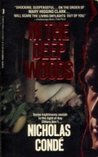
In the Deep Woods (1989)

By: Nicholas Conde

Genre: Fiction, Thriller, Mystery, Suspense

Children’s book author and illustrator, Carol Warren, never expected something like this could happen to her. She’d lived a normal life filled with good friends and family as well as success as an author. Everything changes when her best friend is found brutally murdered and Carol becomes involved in the investigation. At first she just wants answers about who killed her friend, but once she realizes someone she loves is a suspect, she will do whatever it takes to prove his innocence, even if it risks her own life.

The first thing I liked about this book is the heroine, Carol. Most books in this vein are focused on getting the heroine to fall for some hunky man working with her on the case and spawning an erotic romance as a side story, but that isn’t the case here. In fact, while Carol may date a few men in the novel, she’s not in the market for romance, and, actually, finds it very hard to get in the mood for it due to the dreadful crimes committed in the case. That is something that makes a lot more sense to me. Carol is also successful and independent, only relying on herself, and she has a great deal of self-respect and loyalty to her friends and family. However, this loyalty could also blind her to what is going on around her.

I also liked the fact that she had her own worries outside of the mystery, such as her father’s failing health and the fact that she’ll probably have to put him in a nursing home. She and her brother discuss it and wonder if it’s the right thing to do – and it’s very hard for Carol to imagine being ripped from her home in her final years. She has a very kind heart, loving deeply and honestly those who are close to her, and I felt for her in making that decision.

I thought the story was very suspenseful, and I whipped right through the novel because I needed to know what happened next. Is the killer who the police believe it to be, or is it an elaborate frame job? Was Carol really in danger of becoming the killer’s next target?

I also liked the scenes from the killer’s point of view and how he was styled. He is definitely creepy, especially in the point-of-view scene where he has his victim tied up in the woods and prepares to torture her. He reminds me a lot of Ted Bundy – how he uses the ruse of being somehow handicapped in order to gain the sympathy and trust of a would-be victim, and then gets the better of them. Also, his final act of murder as he begins to lose control toward the end of the novel is an obvious nod to the murders of nursing students committed by Richard Speck in the 1960s. The Green River Killer is mentioned in comparison to the killer in this novel, but I feel that there aren’t many similarities, aside from where the bodies are found.

I liked how the book dealt with the idea that a family member or friend that you’ve known your entire life could turn out to be a serial killer. Carol has to deal with the fact that the police believe her brother is the Deep Woods Killer, and another character reveals that they have a family member guilty of such atrocities. Even having someone in your family suspected of such crimes can do a number on the rest of the family, and of course, the suspect themselves – as despite the saying, “innocent until proven guilty,” in the public eye, it’s often guilty until proven innocent.

I’m not sure how I feel about the character of Paul Miller. He goes to elaborate lengths to disguise his true self and true intentions from Carol, despite asking her to trust and help him in his investigation. I can’t describe such over-the-top instances of this without giving away spoilers, but I can say that it is hard to accept that someone would go that far to keep up a façade. These actions felt like they belonged in some espionage thriller, not a murder mystery. Also, it was because of his constant lies that I couldn’t bring myself to like him by the end of the novel. I found myself falling for his lies along with Carol, so I felt equally betrayed when I would find out he was just spinning another web of deception.

The other thing I didn’t really like was the ending – I found it rather anti-climactic. I wanted a dramatic show-down between Carol and the killer, and instead it is over in an instant. I felt a bit let down after all of that built-up tension and hours of reading.

Overall, it’s definitely a great read and I recommend it for mystery buffs. It’s very suspenseful and keeps you guessing until the final few chapters, and even then, I was hoping there would be some twist and it would turn out to be someone else. Still, it was a well-written mystery that kept my attention, and I would probably read it again.

7.5/10

Friday, March 29, 2013

My Bloody Valentine (1995)


By: Jo Gibson

Genre: Young Adult, Horror, Mystery

It’s February at Hamilton High and Valentine’s Day is right around the corner. Amy Hunter and her friends are planning a big Valentine’s Day dance, complete with the crowning of the King and Queen of Hearts. However, someone doesn’t like this idea, and one by one the girls in the running for Queen die in mysterious “accidents.” As the dance draws closer, it appears Amy might be in the lead for the Queen, and that puts her life in jeopardy.

While this was a quick read, I never really found myself that engrossed in the story line. I think my main problem was the characters; they are all very one dimensional with no memorable personalities. Amy is our heroine: the good girl, sweet, and virginal, who gets good grades and is class president. Colleen is her brainy best friend. Tanya is the snooty, popular, beautiful head cheerleader. Gail is a pretty blonde who dumbs herself down to gain male affection. Jessica and Michele are nobodies until it’s their turn on the chopping block, and then they are just irritating.

All of the girls were unlikable. Colleen and Amy are the only ones who seem to have an ounce of human decency in them. Tanya is the typical, backstabbing, gossip queen, and Gail follows right in her footsteps. Jessica becomes a hateful person and tells Michele she doesn’t need her as a best friend anymore, making Michele cry in the school hallway. I felt bad for Michele, until she was walking her dog, and hoping he would keel over and die so she wouldn’t have to walk him anymore. (A dog that loves her and tries to protect her, I might add!) 
Aside from Amy and Colleen, these girls are just useless human beings, and I was honestly rooting for the killer to take them out.

Amy wasn’t exactly likable either, but that is because she’s such a boring cliché. I enjoyed reading her experiences with her first date and first kiss, and I liked how she realized who she really wanted to be with had been right there the whole time. She is also kind of dumb at times, but she pulls off a pretty smart move at the climax, which surprised me.

The dialog was awkward. I know I was just a little kid when this novel was written, but I don’t believe that high school girls talked the way these girls did. Their conversations were used to provide a lot of exposition, and that is exactly how it reads. These girls are just talking to push the plot forward, the author is talking through them, they have no distinct voices of their own.

Speaking of the plot, I find it hard to believe that after the first two accidents, the school wouldn’t call off the King and Queen contest. How can the Sheriff not suspect foul play when all the girls are wearing the same half-heart pendent? When all of the girls received threatening Valentine’s cards? I know the principal really wanted a new collection of science books (the money from the dance/contest was going to his book fund), but I highly doubt he’d risk the lives of his students for it. Also, Amy’s mother is more worried about a dress that Amy’s boyfriend picked out for her than the fact that girls are dying all over town? That makes no sense.

The killer was fairly obvious. There were three prime suspects and two of them seemed like red herrings to me. The writing itself wasn’t very good either. As I said above, the dialog was awful and the characterization was poor. The descriptions of the deaths were clunky and amateurish – there’s no suspense (which could be because I didn’t care about the characters), and wording is ridiculous. [Paraphrasing:] “A heavy beam fell from the rafters, smashing her into oblivion.” I hate the way this reads and sounds in my head. I felt like the description was similar to how I wrote in junior high – and believe me, those stories were nothing worth publishing!

This was honestly a rather silly young adult horror novel - basically the teen fiction equivalent of a poorly written, goreless made-for-television slasher movie. The characters were dull, clichéd and often mean-spirited, and the plot doesn’t seem very well thought out. Still, it kept my attention, and I cared enough about Amy to see her through the ending and root for her and Danny, so the book wasn’t terrible.

4.5/10

Monday, November 19, 2012

I Know What You Did Last Summer (1973)


By: Lois Duncan

Genre: Young Adult, Suspense, Mystery

On a clear, starry July night, Julie James and her friends were coming home from a barbeque when they accidently hit and kill a ten-year-old boy on his bicycle. They discuss what to do and fear gets the best of them, making a pact to flee the scene and forget the tragedy ever happened. One year later, just as the four teens have gotten their lives in order, they begin receiving notes and clippings related to the incident. Someone knows what they did and that someone wants revenge.

This is my second time reading this novel and I have to say I like it a little less on the second pass. Lois Duncan is one of my favorite young adult authors, and the story is still very gripping and suspenseful – but some of the writing was a little clunky in places. Words were repeated awkwardly within the same sentences, details were repeated over and over again (Helen’s been dating Barry for two years, the fact that the four teens made a pact), and stories are told multiple times from different characters. I also felt the ending was a bit rushed and nonsensical – did the villain actually think he/she was going to get away with it? So many loose ends are left that the police would find out the bad guy’s identity in no time. I also wish there was an epilogue so I could find out what happened to the kids after the final confrontation.

Julie and Ray are the only likable characters as they are the only ones who really seem to feel badly about what happened. Julie’s personality changed completely, as she cut social ties, dropped from the clubs and cheering squad, and began hitting the books like crazy. The guilt has weighed heavily on her both physically and emotionally. It appears to have affected Ray strongly as well. Helen seems to only care about herself, her relationship with Barry and her looks. She is very self-centered and despite being a beauty queen, she has very low self-esteem. She also can’t see Barry for what he is, a two-timing jerk who is willing to put her life and the lives of Ray and Julie in jeopardy to cover his own hide. He uses her as a showpiece because he can claim he’s dating a local celebrity.

There are a few secondary characters as well, such as Elsa, Helen’s sister, who is described as fat, dumpy and sullen – her appearance making people dislike her. (Ray even thinks this when he first meets her, “Never had someone’s appearance made him dislike them before.” Way to dump on the heavy-set people, Duncan…) Elsa’s attitude is what bothered me – she seems to hate her little sister and take pleasure in Helen’s every mistake, although this is somewhat understandable because it’s clear Helen is the favorite daughter. There’s a scene in Helen’s family home where her mother tells Elsa not to eat any more potatoes because she doesn't need to gain any more weight. That’s an awful thing to say to your daughter! No wonder Elsa’s attitude is so negative and depressing!

Mrs. Cox, Barry’s mother, made me want to reach into the book and punch her out. She’s one of those controlling mothers who think no one is good enough for their boy. When a distraught Helen tries to visit Barry in the hospital, Mrs. Cox is unreasonably mean to her and acts like she’s nothing. She is so domineering she actually wants her son to have a life-long injury so she can keep him by her side for the rest of her life.

The villain in the novel is NOT the fisherman – so it bugs me a lot that his image is on the cover of the book. I know the publishers are trying to lure fans of the film to read the book, but these fans will be sorely disappointed. This isn’t a novelized slasher, it’s a story of suspense and mystery. The villain in the novel is a lot more sympathetic than the fisherman, having a very good reason for wanting revenge.

Overall, this is a very different story from the one told in the film. If you’re a fan of the films, you’ll probably be disappointed. It is a decently written suspense/mystery novel, if a bit dated, and a quick, yet enjoyable read despite its flaws.

6/10

Sunday, August 5, 2012

The Steepleton Chronicles


The Body of Christopher Creed (2000)

By: Carol Plum-Ucci

Genre: Young Adult, Mystery

Christopher Creed was always the weird kid, often bullied and dubbed a freak by his classmates. When he disappears, his classmates and the rest of the town begin to speculate about what happened to him. Was he murdered? Did he commit suicide? Or did he simply run away? Everyone has a theory and everyone is ready to blame someone else. For the protagonist, Torey Adams, his perfect world seems to be dissolving as fingers are pointed, blame is passed and the dirty secrets of his neighbors are revealed in the search for the truth.

This novel started out very slow, and I wasn’t quite sure I was going to like it. It is told from the perspective of one of Christopher Creed’s classmates, Victor “Torey” Adams, a young man surprisingly affected by Creed’s disappearance. Up until Creed disappeared, Torey had a perfect life – he was on the football team, had his own band, and was dating a beautiful girl named Leandra. Slowly his world begins to unravel as he sees the true colors of his friends and realizes how different he is from them.

Torey and his friends Ali and Bo are the only likable characters in this book. At first I wasn’t even sure I was going to like Torey, due to his secretive nature and angry outbursts. As he began to tell his story, though, everything made a lot more sense and I understood his behavior. Ali’s home-life is fairly disturbing, and Bo is the ruffian from the wrong side of the tracks who has a hidden sweet side. The rest of Torey’s friends were insufferable, especially the girls. Leandra is a “good Christian” that frowns upon gossiping, yet doesn’t hesitate to speak ill of people she feels are below her. Renee is willing to make up nasty rumors about those who do something to offend her, some being very serious accusations of law-breaking. She is very vindictive and I wanted to reach into the book and choke her. One of the most irritating characters is Chris’s mother, who is the first person to start accusing people of being involved in the disappearance of her son.

Once Torey begins hanging out with Ali – Creed’s neighbor – they begin investigating his experience on their own. This is in part of their own curiosity, and partially because he was a good kid and they felt someone should have looked out for him. This investigation leads them on an interesting path and reveals some secrets that the town would rather keep hidden.

Despite the incredibly irritating characters, the story was gripping. While the first few chapters moved a bit slowly for me, I whisked through the last 75% of the novel in one afternoon. When things finally got interesting the story moved right along and didn’t stop until the open-ended conclusion. At first I was a little bummed, because I don’t like my mysteries being left open for interpretation, I’m one for narrative closure. However, I discovered there is a sequel, which I cannot wait to get my hands on and continue on the journey to solving this mystery.

Overall: Slow moving at first, but after the first four chapters it becomes difficult to put down. It’s an intriguing look at the effect that the disappearance of one boy can have on an entire town. I’m happily awaiting the moment I can get my hands on the sequel.

7.5/10


Following Christopher Creed (2011)

By: Carol Plum-Ucci

Genre: Young Adult, Mystery, Drama, Fiction

It’s been five years since Christopher Creed disappeared from Steepleton and still no one is any closer to finding out what happened to him. Torey Adams has just about abandoned the website he created in Chris Creed’s name, and is now on his way to being a successful rock star. Bo Richardson joined the Army and Ali McDermott is engaged and on her way to her Master’s Degree in Social Work. They’ve put Steepleton behind them.

The reader is now seeing Steepleton through the eyes of college reporter Mike Mavic, an avid reader of Adams’s Chris Creed website, as he arrives in town to do a story on the missing boy. To the rest of the town, the disappearance is old news. A few of the local teens are convinced he’s dead, but not Chris’s younger brother, Justin, who believes he can will his brother home. When tragedy lures Bo, Torey and Ali home again, the truth is finally revealed.

Mike is a great protagonist, determined to get his story despite his disability (legally blind) but not willing to break any ethical boundaries. He’s a professional, but he can also offer insight to what Chris Creed might have been going through, having had similar life experiences. His girlfriend, RayAnn, is sweet and very intelligent, helping Mike with his stories, interviews and research. She’s a lovely character, and I would have liked to get to know her even better.

I loved that the author brought the original main characters back for the sequel, letting them play a role but not being the main focus. It was great to see the story from a new perspective, one that could offer insight to what may have been going on in Chris’s head the day he disappeared. I also loved the focus on Justin and what has happened to him since the first novel. He’s a troubled kid, having been diagnosed with bipolar and self-medicating with an increasingly dangerous drug habit. The mother Creed has come even more unhinged and turned to alcohol to comfort herself, making her even more irate and irrational when it comes to her children.

While the mystery of what happened to Chris hangs in the air until the final pages, this is his brother’s story. The reader sees how different Justin is from his brother. While Chris couldn’t deal with his controlling mother, Justin learned to stand up to her, and even takes care of her when she drinks herself into oblivion. Justin is angry at Chris for leaving and desperately wants him to come home. It is also the story of the town and what has changed since Chris vanished and Torey, Ali and Bo left for bigger and better things.

Plum-Ucci has crafted a well-thought-out continuation to her original mystery. The characters are likable and sympathetic and the story grabs you and doesn’t want to let go. The twist ending was something I didn’t even see coming and makes me want to read the novel again to look for clues leading up to the final reveal. This was a great follow-up and I can’t wait to read more of this author’s work.

7/10

Tuesday, July 31, 2012

Echo Falls Mystery Series


Down the Rabbit Hole (2005)
Book #1

By: Peter Abrahams

Genre: Young Adult, Mystery

Thirteen-year-old Ingrid Levin-Hill has a secret. She was in the wrong place at the wrong time and now there is evidence placing her at the scene of a murder. A soccer player and actress in the Echo Falls theater program, she has enough on her plate before adding on a murder mystery. Taking a page out of her favorite detective, Sherlock Holmes’s handbook, she decides to solve the mystery herself.

I was actually fairly disappointed with this novel. It has such a glowing recommendation from one of my favorite authors, Stephen King, on the back of it that I thought I would enjoy it for sure. I liked it enough to finish, maybe even enough to continue with the series, but I don’t think this book is as great as other people make it out to be.

The main reason I didn’t like this book is Ingrid herself. I thought I could get behind her as we’re both pretty shy and love to read, but her logic does not cohere with my own. She allows panic to get in the way of her judgment and makes incredibly stupid errors – for example, breaking into a crime scene to remove evidence that she had been there and nearly getting caught by the murderer and the police. She lies to the people that could actually help her and reveals more than she should to someone she hardly even knows. Lastly, I found it very hard to believe that no one noticed she was missing during all of her little excursions to find clues.

The killer is predictable. I had my suspicions the first time the character was introduced. The fact that no red flags are going off in Ingrid’s head is beyond me, especially since she’s such a mystery lover. The behavior of this character had me sure of the killer’s identity long before she stumbles onto it. 

This brings us to the ending which is very anticlimactic. We never find out the killer’s side of the story, the motive behind the murder, though we can speculate what it is. When she finally comes clean with the town sheriff, there’s no conversation between the two – just a paragraph about how it went. I feel that since she spent the entire novel lying to the sheriff and avoiding him that the scene where they finally discuss everything should have played a much bigger role in the ending. I also felt like she should have come clean from the very beginning, but then there wouldn’t have been much of a story.

Overall, it’s a decent read but nothing spectacular like many people make it out to be. The heroine is frustrating and the ending lacking. The most compelling character in the story was the murder victim herself, who was only alive for maybe three pages. I kept reading because I wanted to find out what happened to her. Still, the novel was hard to put down, and I will probably continue with the series. Maybe when Ingrid isn’t fearing that she’ll be in trouble she’ll be a more likable character.

5/10


Behind the Curtain (2006)
Book #2

By: Peter Abrahams

Genre: Young Adult, Mystery

Ingrid Levin-Hill is back for another predictable Echo Falls Mystery. This time it is one that directly involves herself and her own family. Her father’s job is in jeopardy due to the recent hiring of a new Vice President of the company. Her jock brother is becoming exceedingly buff and temperamental, and she, herself, is kidnapped on the way to a school function. Although she makes a daring escape from the trunk of a moving car, she doesn’t have a scratch on her, leading to her having to prove her story. Thus begins her investigation.

I had hoped that this story would be a little better than the previous one since Ingrid was actually a victim. It wasn’t. Ingrid is still as foolish as ever, doing things that don’t make sense and just outright snooping when she shouldn’t be. She doesn’t call the police when she discovers evidence that might lead to the kidnapper, but instead touches it with her bare hands and pockets it. She doesn’t tell the nurse on duty when she sees an unauthorized person going into a restricted area at the hospital, but instead investigates it herself. Plus, she puts herself in dangerous situations, never letting anyone else know what she’s about to do, and nearly getting herself killed. This kid must have one heck of a guardian angel watching over her.

The only likable characters in this sequel are the Sheriff, his son, and Grampy. The sheriff tries to work with Ingrid, but she never gives him the entire truth – and doesn’t even bring him in on her own investigation. Joey, the sheriff’s son, adores Ingrid and is willing to defend her. Grampy is just hilarious, stubborn as anything, and willing to do what it takes to protect himself, his property, and his family.

The rest of the characters were purely annoying. Ingrid’s father is the worst. Apparently your job being in jeopardy makes it okay to treat your family like crap and act like whatever your children do isn’t good enough. Her brother is also a complete jerk, but at least the violent outburst he had with Ingrid in the first book is finally explained. Ingrid’s math teacher, Mrs. Groome, seems to hate Ingrid for no apparent reason – because Ingrid wrote in a text book and did miraculously well on a test in the last novel, I guess. It’s not really clear why this woman has such a grudge against this girl.

The overall plot was predictable. The shady characters are easy to pick out as soon as they enter the story, and I had the motive for Ingrid’s kidnapping figured out long before the big final reveal. I also knew what was going on with her brother simply by reading the description on the book flap. It also used the same elements as the first novel – with the “accidental” taking out of someone else higher up in the power chain, and the suspicious newcomer. At what level does Abrahams consider the young adult’s ability to read and solve a mystery?

 It also left me with questions, but not the open-ended kind that make you think. For instance, how does everyone in the whole town know where Ingrid’s tree house is? It serves as a major plot point in the story, but her father had built it for her and her brother when they were much younger. For someone who seems to want to know about everything, why doesn’t Ingrid pay attention in school? Her hero, Sherlock Holmes is incredibly intelligent and well-educated, but she ignores most of what her teachers are talking about – even when it pertains to something she is investigating. Lastly, how does a blindfolded girl manage to leap safely from the trunk of a moving car, hit the ground, and not be injured in the slightest? Not to mention, hit the side of the road, rather than falling into oncoming traffic?

Overall, this is another mediocre young adult mystery with an obvious ending. Ingrid is still annoying and she shouldn’t be revered for her sleuthing abilities – which consist of falling into a dangerous situation and happening to close the case.

4.5/10


Into the Dark (2008)
Book #3

By: Peter Abrahams

Genre: Young Adult, Mystery

Ingrid Levin-Hill gets sucked into yet another mystery when, while snow shoeing with potential boyfriend Joey Strade on Grampy’s land, she discovers the body of a murdered man. The police are convinced that Grampy is the killer and it is up to Ingrid to clear his name.

I liked this entry a little better than the last two, but not much. Ingrid was slightly less annoying as she didn’t do as many of the stupid things she has been known to do in the past. She even admits her short-comings when she is analyzing a passage from a Sherlock Holmes story and follows it up with, “Yes, that was her, missing everything that was important.” This quote struck me because that is how I always feel about Ingrid when she attempts to solve a mystery – she is missing all of the important details that the readers have picked up on from the beginning.

I find that to be one of the biggest flaws of this series – I really don’t like the fact that the reader is always ten steps ahead of Ingrid. Having read young adult novels since I was ten years old, I have found some lovely, challenging mysteries written for the age group. The Echo Falls Mysteries are none of the above. The ten-year-old me would have been further ahead of Ingrid in solving the case.

While reading these books, I feel like Abrahams is almost insulting the intelligence of his readers. He doesn’t seem to have a grasp on the reading level of preteens and teenagers – the demographic he is writing for. Kids are a lot smarter than he seems to give them credit for – and he frequently repeats things with the slightest significance over and over again. The reader got this a long time ago, why can’t Ingrid?

Another reason I feel like Abraham’s has little knowledge about the age group he’s writing for is the obviousness of the bad guys. While this one wasn’t as formulaic as the last two, the killer stood out as they always do. Also, the killer is a moron, doing something stupid that leads Ingrid right to him. He’s even less intelligent than Ingrid herself – who is no genius either, as yet again, she stumbles onto the killer’s identity and nearly gets herself killed.

Another thing that annoys me about Ingrid is that she always withholds evidence from the police – evidence that could clear someone for a crime they didn’t commit – such as her beloved grandfather. She doesn’t reveal this information because she’s afraid of betraying Grampy – but she’s saving him from spending the rest of his life in jail, and would be getting the police to look in another direction, I would think that Grampy would get over it. She is loyal to a fault and she is almost always protecting someone, whether it’s herself or a family member.

There were a few things I did like about this book. First, the case was actually interesting and brought up a lot of history for Grampy – discussing his time in World War II. We also finally learn the reason behind his many doctor’s appointments that he refuses to talk about. I didn’t like that he was so determined to keep this reason a secret from his family that he was willing to go down for a murder he did not commit. His usual charming stubbornness was taken to the extreme in this entry, leading Ingrid into danger in her attempts to clear him.

Second, she finally realizes what the readers have known from the beginning, her dog Nigel is actually very intelligent. Now maybe she won’t be a little brat about taking him for walks and constantly acting like he’s worthless. He has proved his worth time and again to the readers of the series, maybe Ingrid will finally see it too.

Third, the end of Hansel and Gretel was actually incorporated into the end of the book, so for the first time, it actually felt like the mystery and the play she was in were linked. Ingrid was also surprisingly able to think on her feet during the climax of the story – which is something she normally doesn’t do very well. It redeemed her character in my eyes a little.

Overall, this entry was better than the last, but it is still riddled with the problems that make me rate the series so low: annoying lead, obvious villains, and a very formulaic plot.

5.5/10